Earlier this year, in June 2026, Ulysses Black and I went on a small research trip to Wild Futures Monkey Sanctuary in Cornwall. I volunteered at this sanctuary way back in March 2020 - yes, the month the UK went into lockdown! My 2 week placement was cut short, and I had to leave after 10 days for this reason, in a panic about all trains being cancelled.
It was an incredible experience, and one about which I intended to write a long blog post as soon as I got home on March 20th 2020 - I wrote a long journal entry that day and intended to share it as a post. This blog post is not that write up, but I will share that journal post very soon, if people are interested in reading.
This post, however, is about some experimental embroidery/ textile art I did recently inspired by our much more recent trip there this summer.
The Monkey Sanctuary hasn’t been open to the public (as far as I understand) since the pandemic. They just can’t justify the extra costs when they have so little funds and so much to pay for in terms of their (absolutely top-notch) animal care. They kindly let us go there, though, for our research. We had applied for some Arts Council Funding to do this, but didn’t get it, but decided to go to Cornwall anyway. We had wanted to explore how environmental enrichment (objects and activities that promote natural beahviour in captive animals) helped contribute to a rescued monkey’s healing process, and helped them to become more ‘monkey’ again. We wanted to focus particularly on the strange, sculptural enrichment objects made by the volunteers and care staff, built from old empty sweet packaging and upcycled containers, bulging with freshly forgaged herbs and nuts and seeds wrapped in leaves… with holes drilled in and crisscrossed with twigs and branches to create a sort of puzzle for the monkeys, who have to pull out the sticks to make the wholesome treats fall out for them to unwrap. It reminded me of a game I had as a child called Tumblin’ Monkeys.
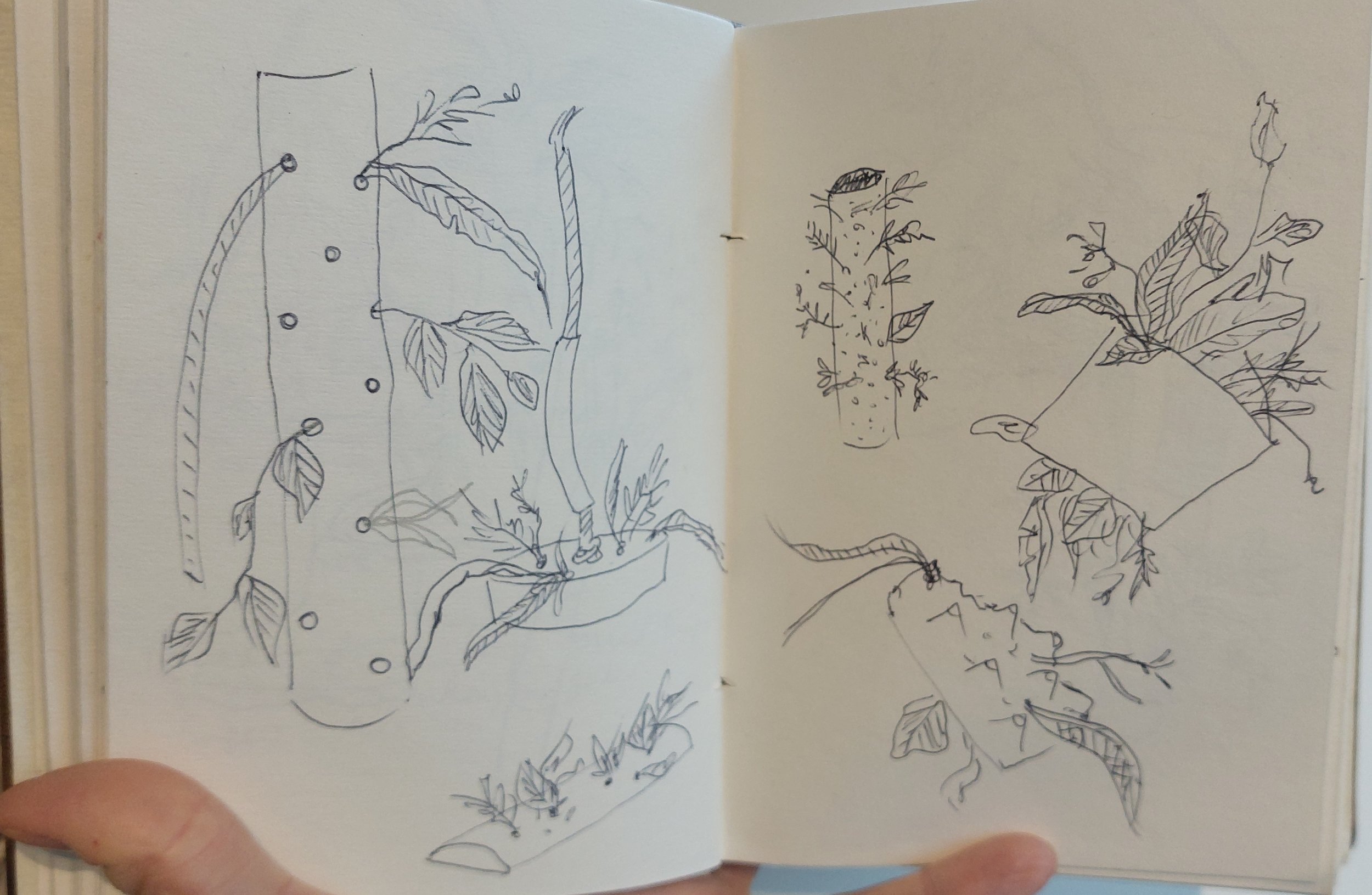
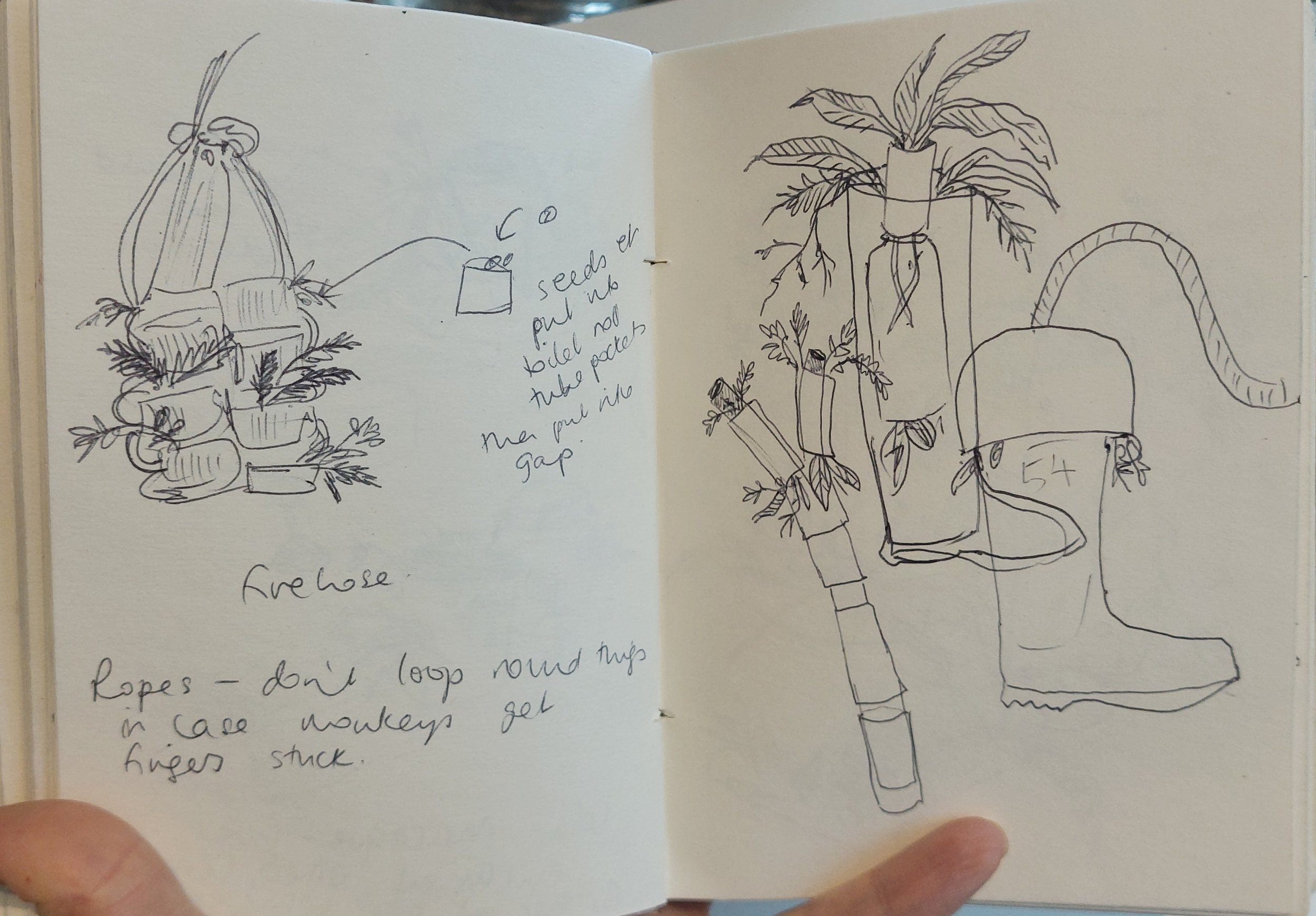
We spent two days at the sanctuary, watching volunteers making enrichment and then watching the monkeys tear it apart. It was wonderful! The weather, after weeks of heat wave, was bloody awful. Near torrential rain at times, but amazingly, the monkeys still came out to play with their enrichment. Also, Looe (where the sanctuary is) is utterly lush, and the heavy rain made us feel as though we were in a rainforest at times.
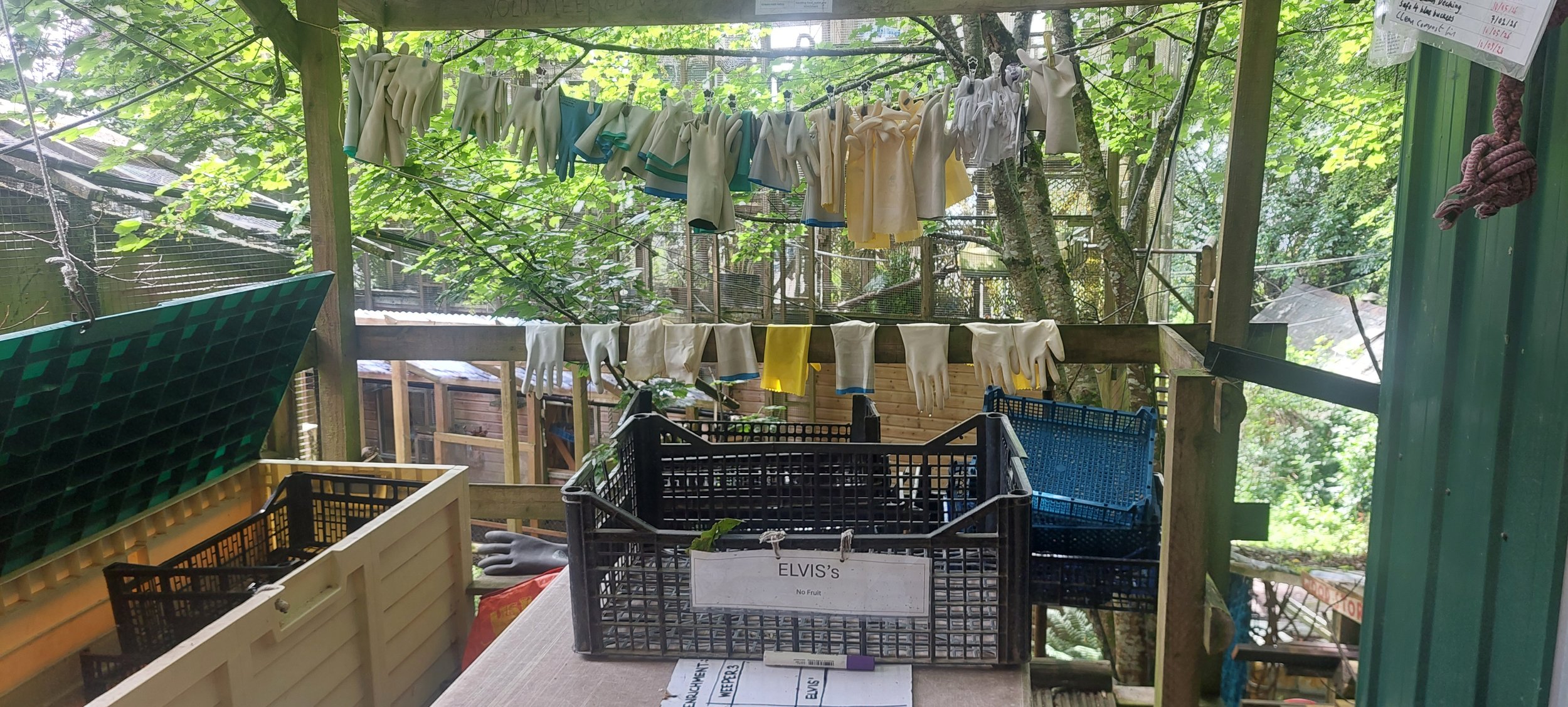
Behind the scenes at the sanctuary, in the enrichment making area
We also got taken around the capuchin enclosures by Kim, one of the primate carers, who told us all about the role the enrichment plays in the recovery of the monkeys - all of whom have been rescued from the pet trade and have various psychological and physical traumas from this. The enrichment helps inspire natural behaviours which they had been unable to engage with as a pet; helps to stimulate their very clever brains, their natural curiosity and dexterity, and helps them build skills for socialising with other monkeys. It also engages them in more healthy behaviour to distract them from stereotypies - self harming behaviours picked up from their traumatic time spent as pets.
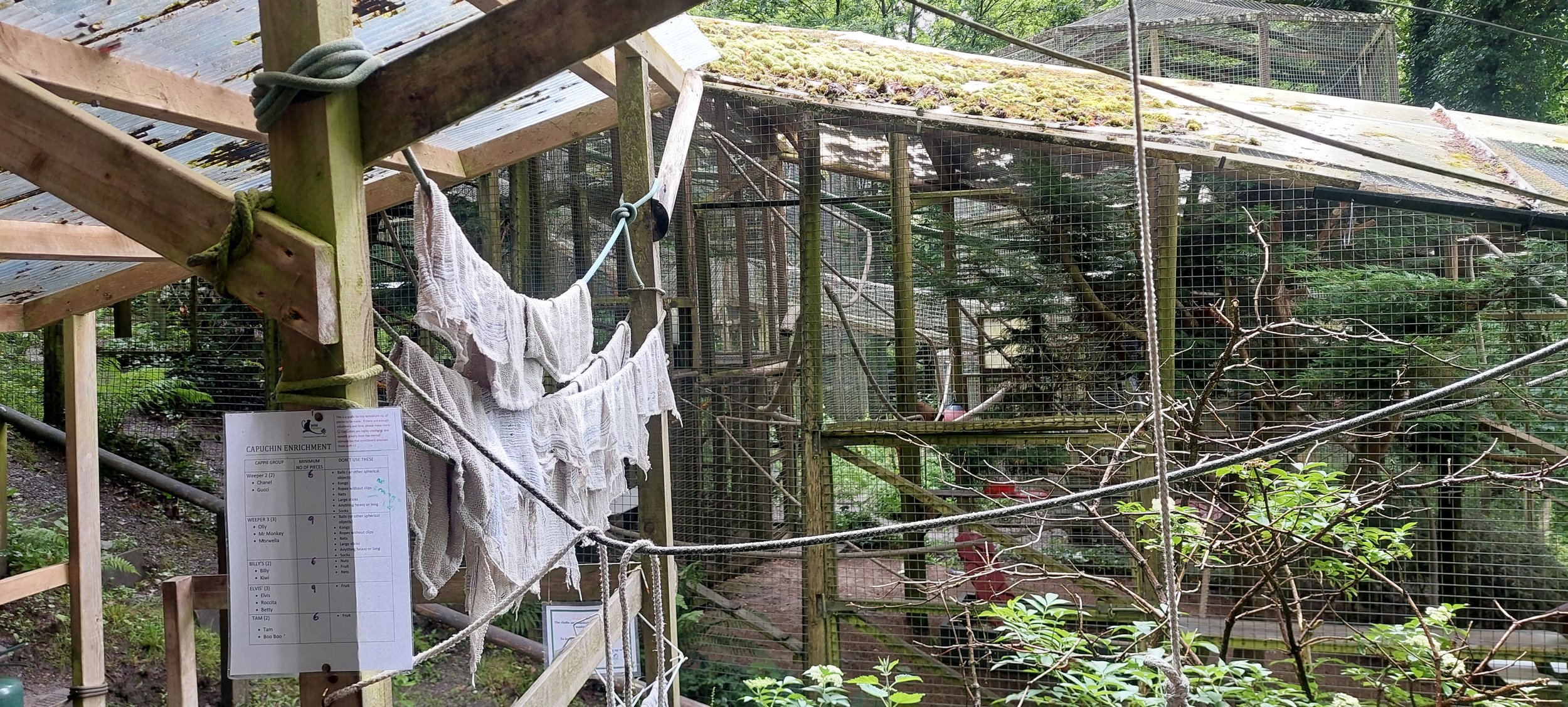
I could talk about this sanctuary for ages, and I will definitely make another post sharing my first volunteering experience there back in 2020. No words can express how special I think this place is. It started up as a commune in the 60s (when it first started rescuing monkeys), and still very much has this sort of a vibe. It is in an old Victorian manor house, ramshackled and sort of collaged together over the decades, and is like a rabbit warren. The volunteers and some of the full time paid staff all live in the house together, with the monkey enclosures next door. As you exit the back of the house, through the monkey kitchen (where the monkey’s food is prepared, and where the volunteers bake special “monkey cakes”), there are little wire tunnels above your head where the monkeys scamper across to get to adjacent parts of their enclosures. The monkeys are given as wild a life as is possible for animals that would not survive in the wild, with human interaction at an absolute minimum, and strictly no physical contact with the monkeys.
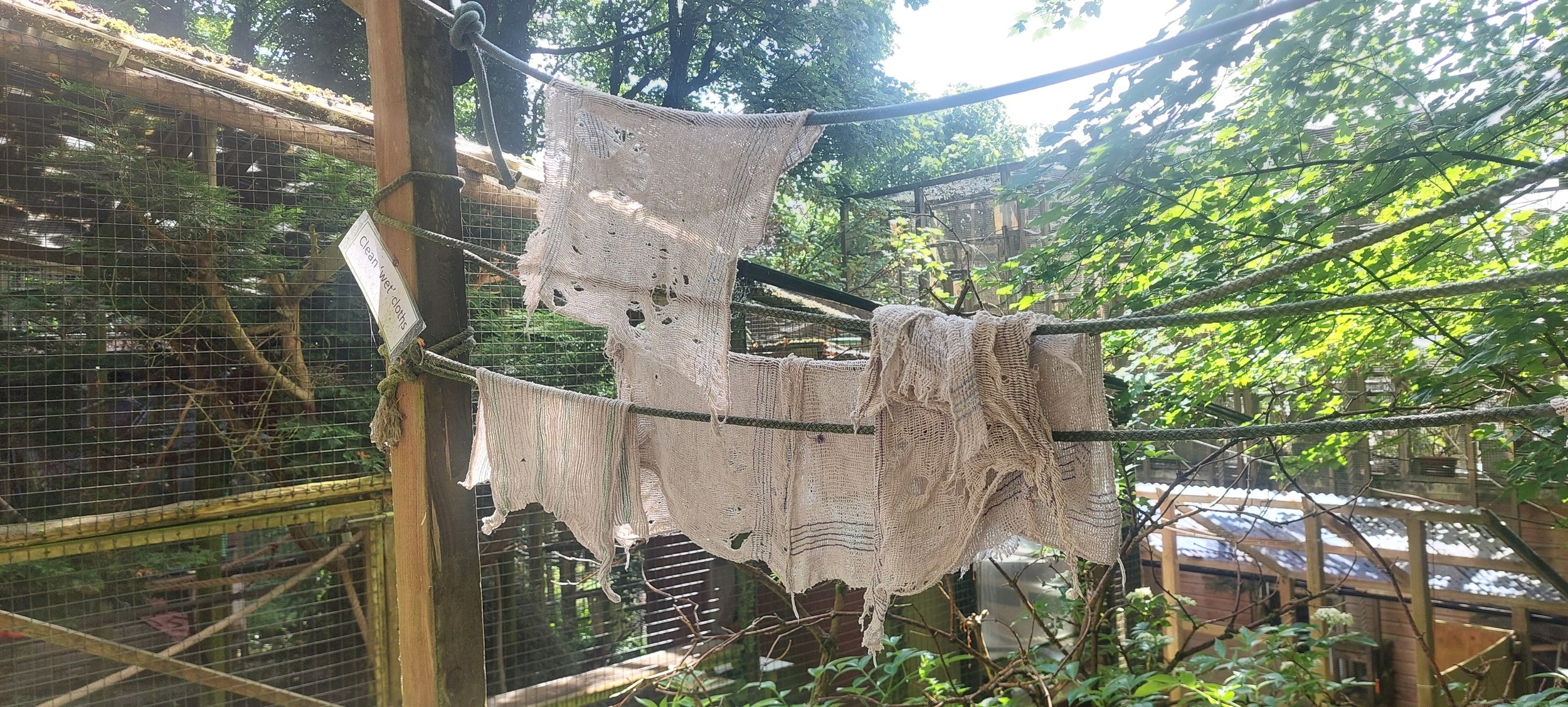
A few weeks after this recent trip, I heard the devastating news that, after 60 years, the Monkey Sanctuary would be closing, and that they were already in the very careful process of re-homing the monkeys. The news was heartbreaking. There will never be another place like the Monkey Sanctuary, which literally evolved over the decades both physically and in terms of its ethos, always ahead of its time as it developed its values and principles, and always on the front of the fight against the cruel primate pet trade. I have been so touched by this sanctuary.
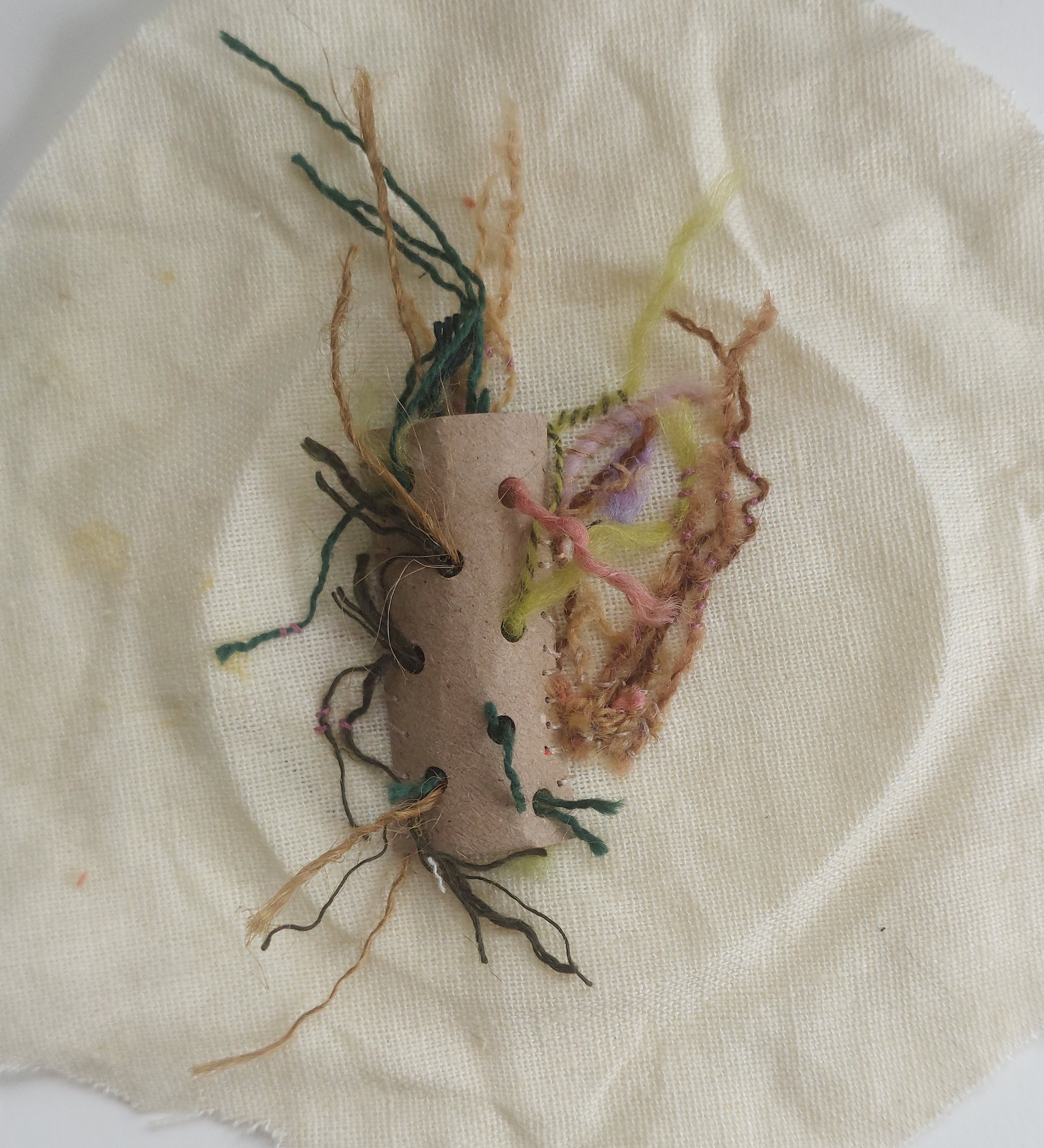
I think I’ve been so sad about the sanctuary closing, that I found it hard to engage with the research we did back in June (that, and I’ve had to prioritise earning some cash!). But in recent weeks, I’ve started experimenting with textile art and embroidery using environmental enrichment as a starting point. Here are some examples…
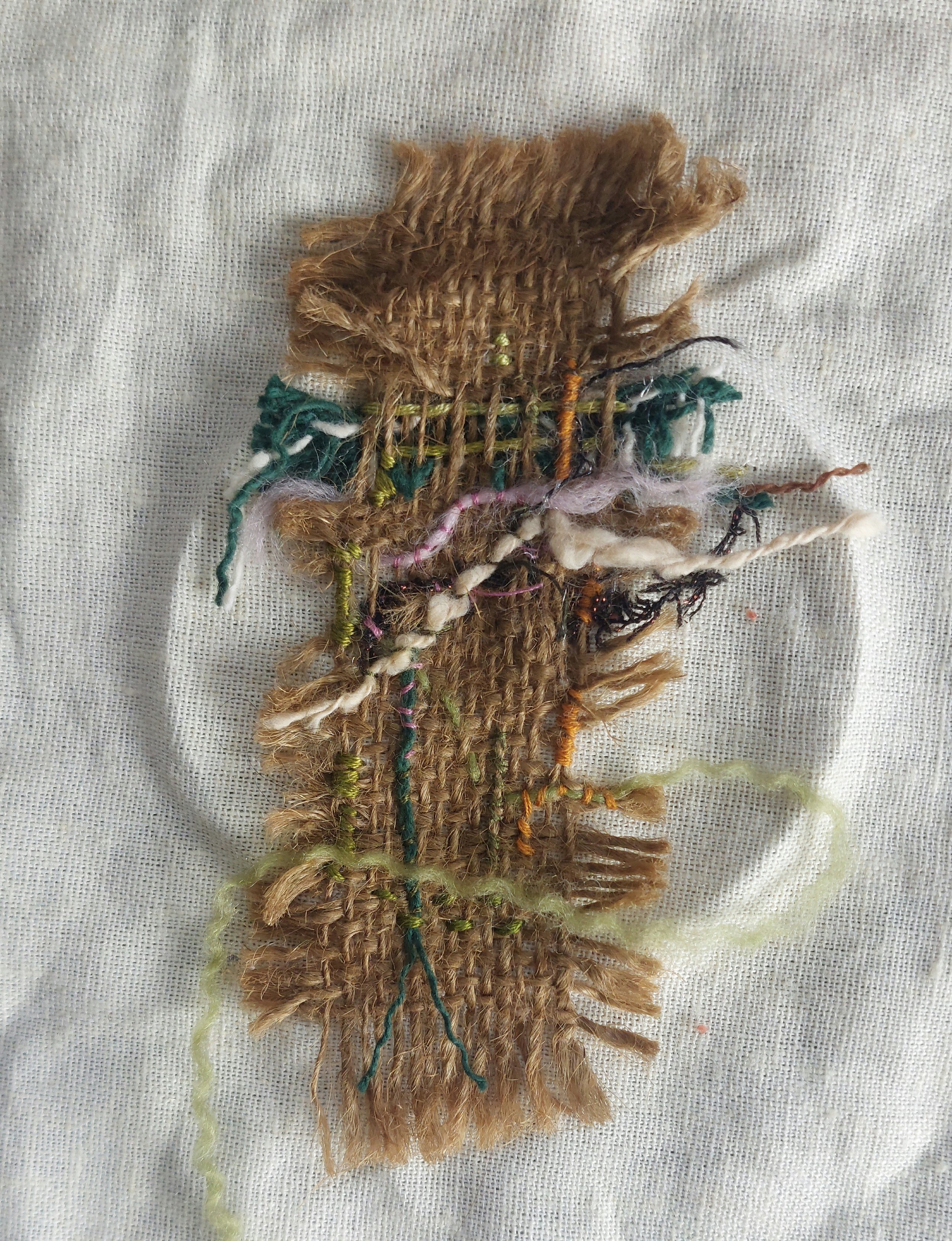
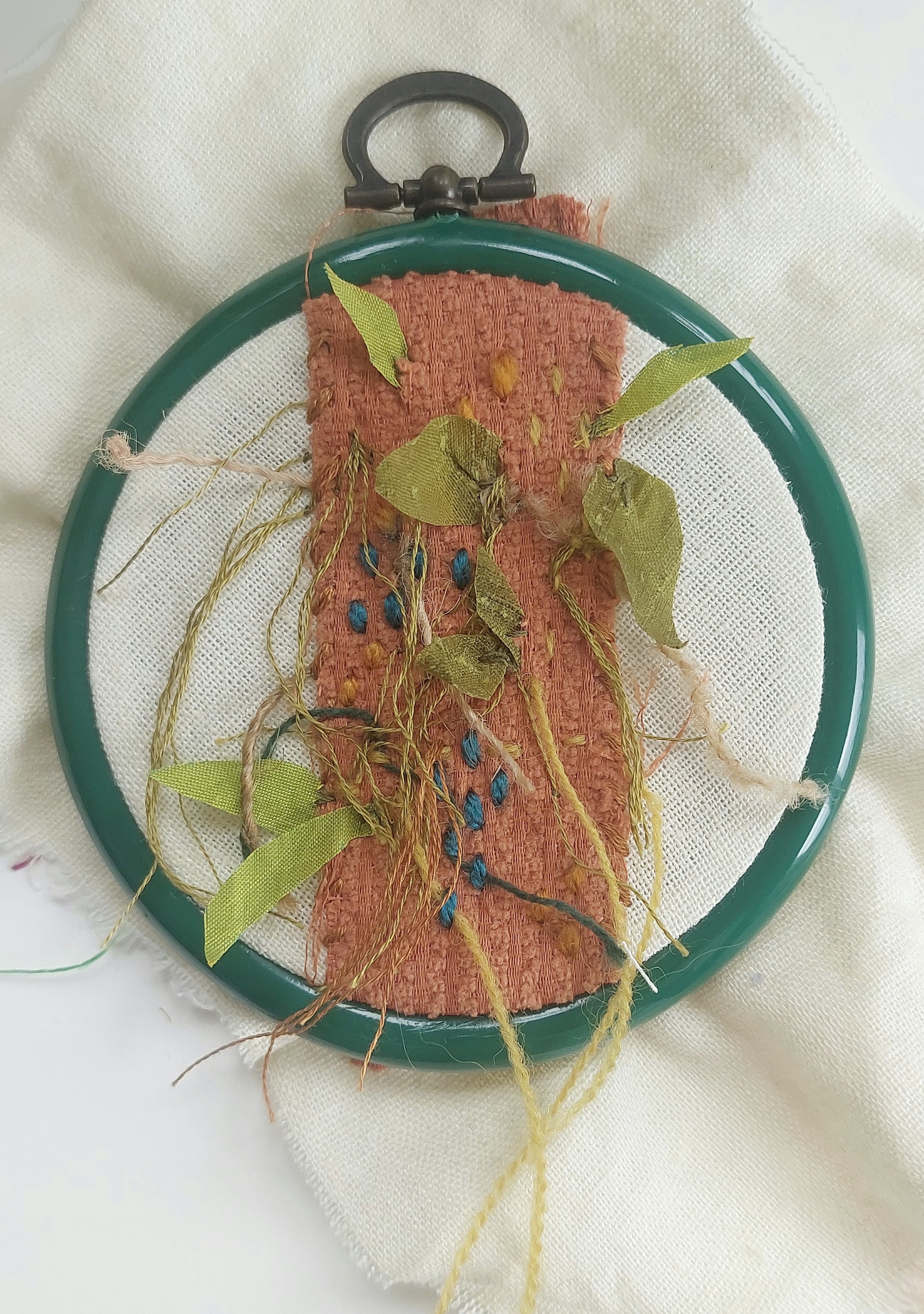
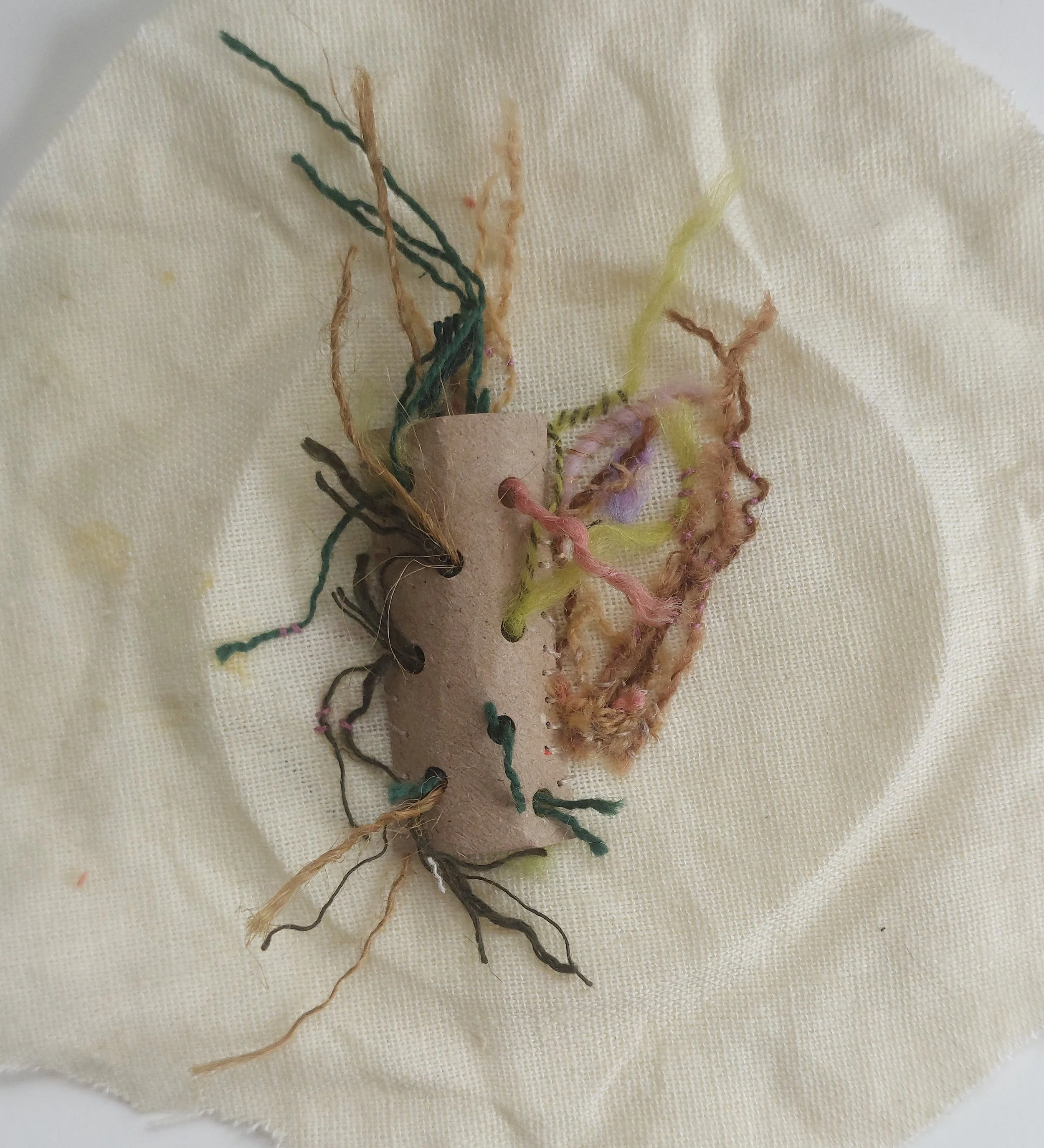
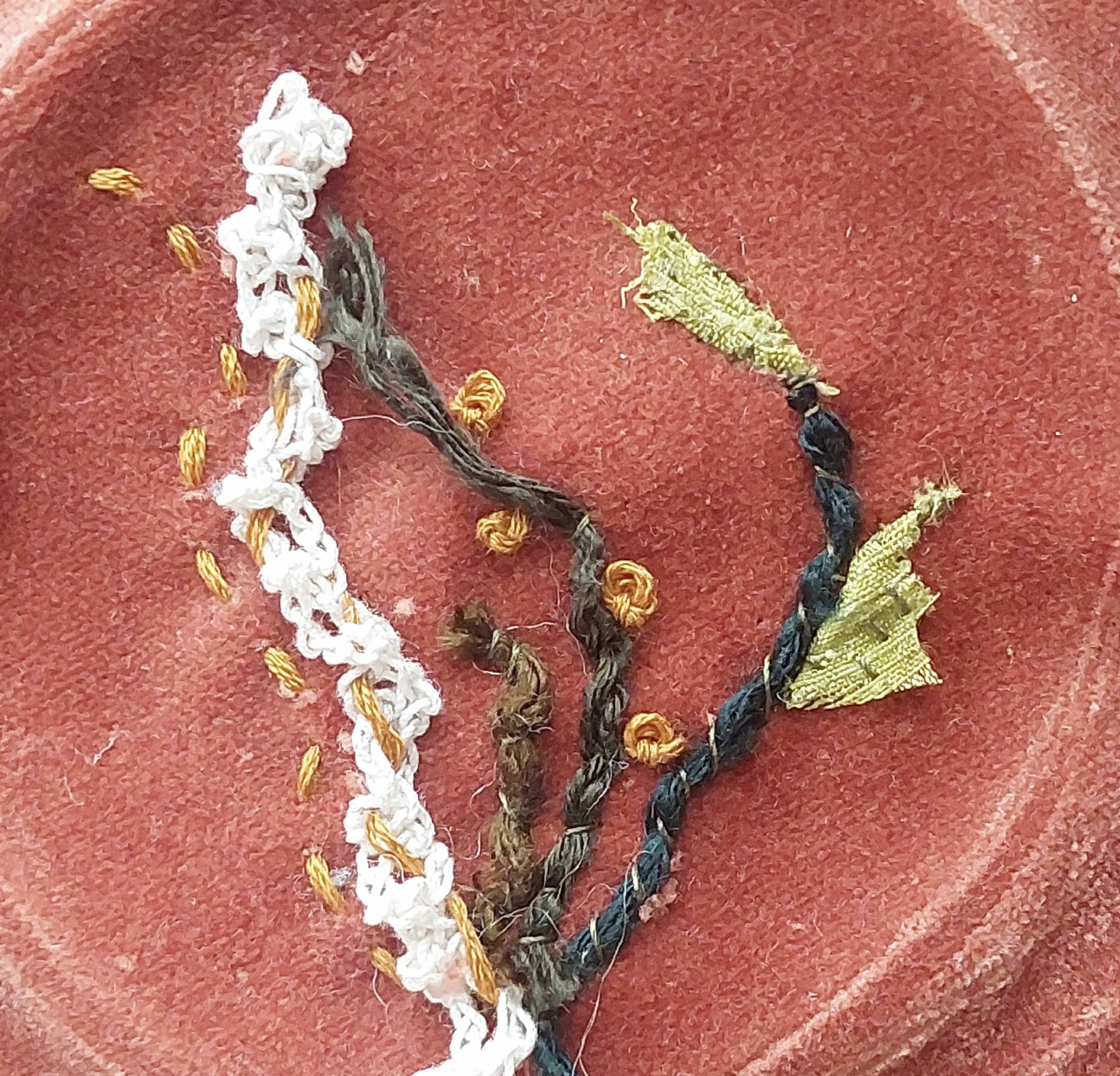
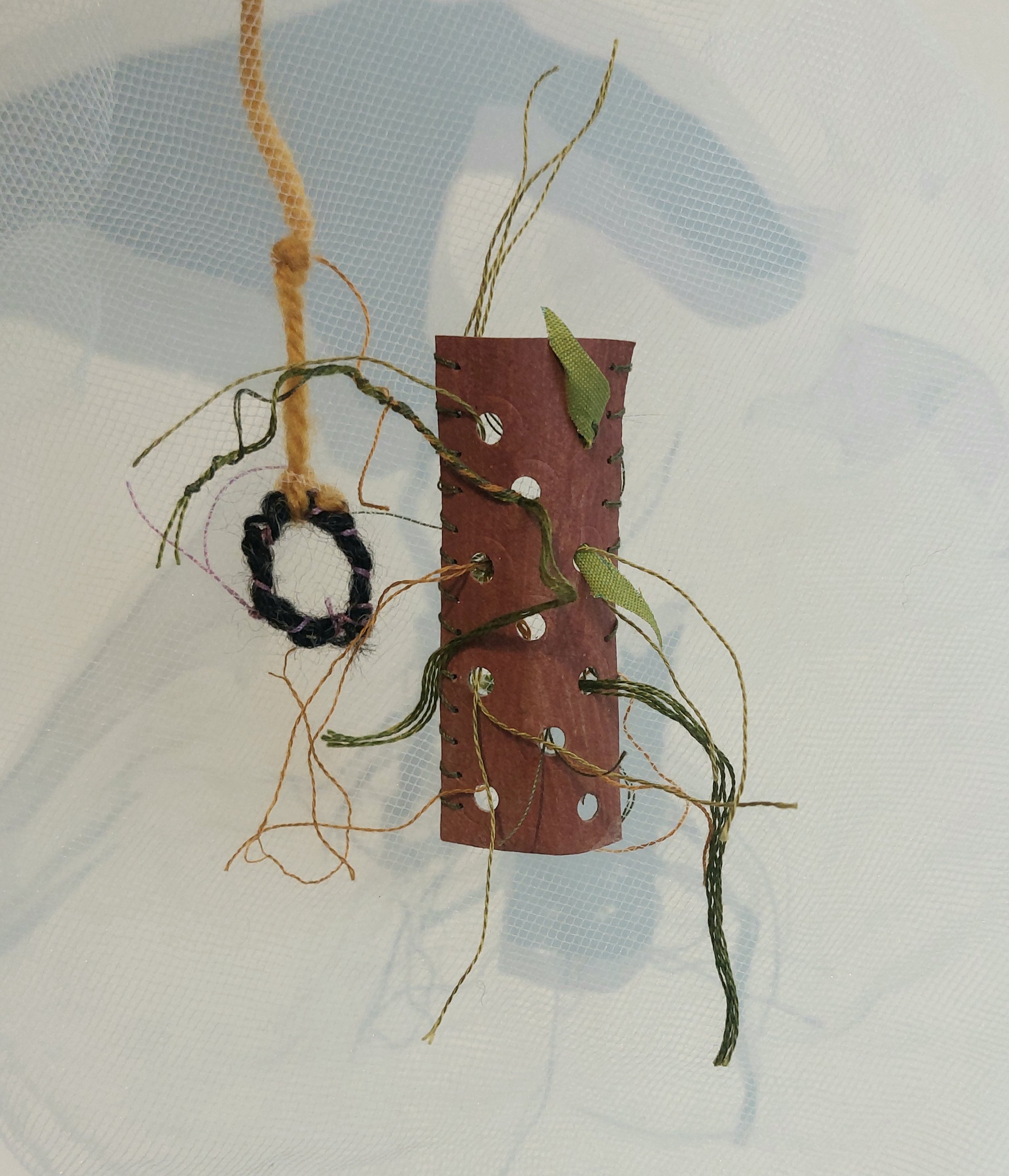
Textiles and the act of stitching seems like an apt way of exploring the process of healing. The monkeys in the care of the sanctuary all have trauma from their previous lives as a pet. Engaging with enrichment occupies their brains and bodies and helps them learn behaviours specific to their species. In this sense, the enrichment helps them find their way back to ‘monkeyhood’, after many years of forced humanisation.
I have some vague ideas of how this work will evolve, but at the moment I am enjoying the experimentation, whilst reflecting on, as I stitch, the deep care that the staff at the sanctuary have devoted to these little monkeys for so many decades, and the sad closure of the wonderful sanctuary itself.
If you would like to learn more about the sanctuary, or would like to help (even though the sanctuary is closing, they still need help with costs to re-home the monkeys, and their charity Wild Futures, which helps to campaign against the pet trade and protect natural habitats of primates, is still going strong), please visit https://wildfutures.org/