Folklore about Baboons
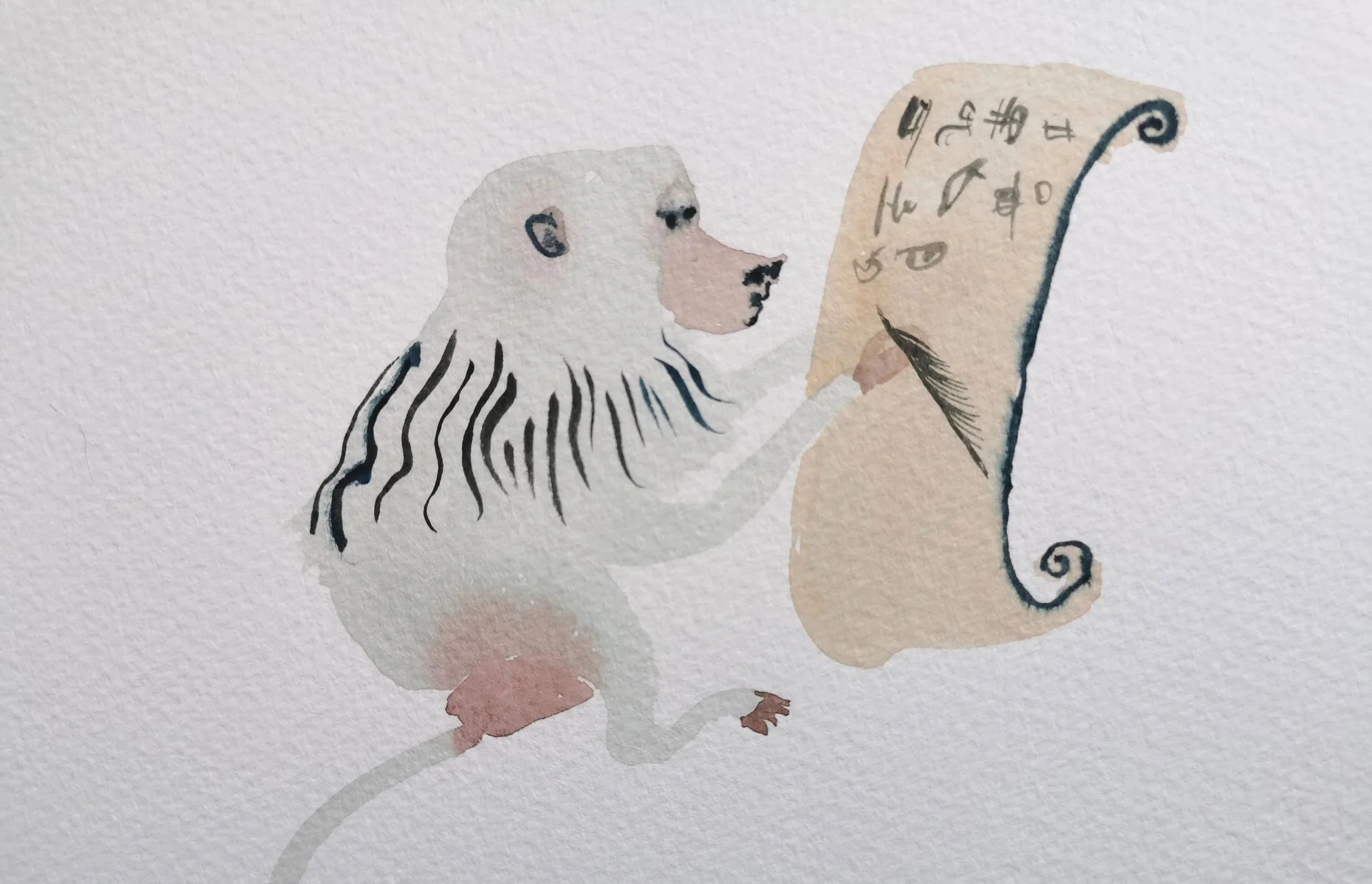
An illustration from my “Monkey Tails” book
I missed International Baboon Day this year back in early December (I always miss these dates!) but, still, as I had already started writing it, I thought it would still be a nice idea to write a short post about baboons!
I recently made a sock monkey chacma baboon. I really enjoy making these species specific sock monkeys - using very limited materials to get the most prominent characteristics of specific species of primate.
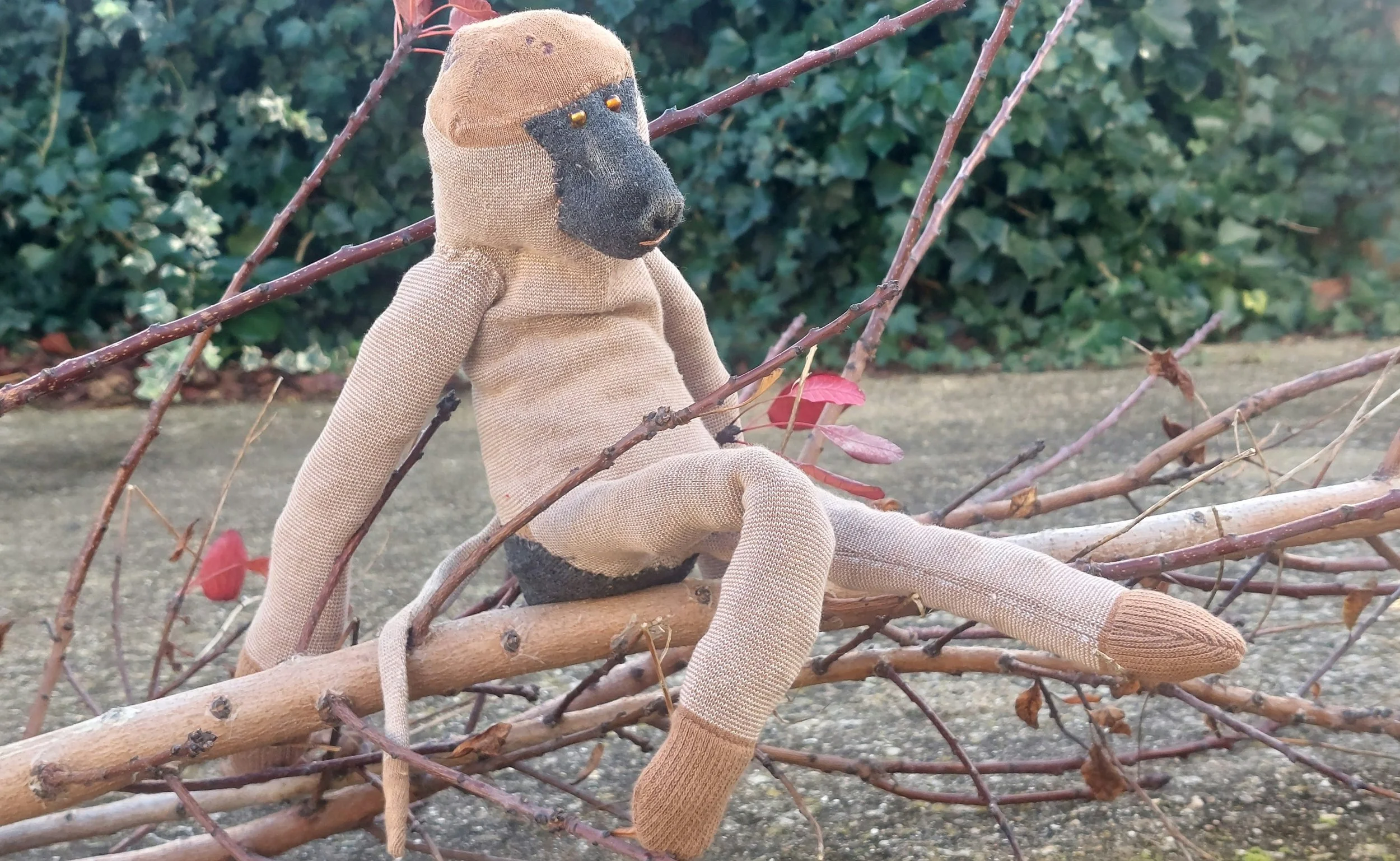
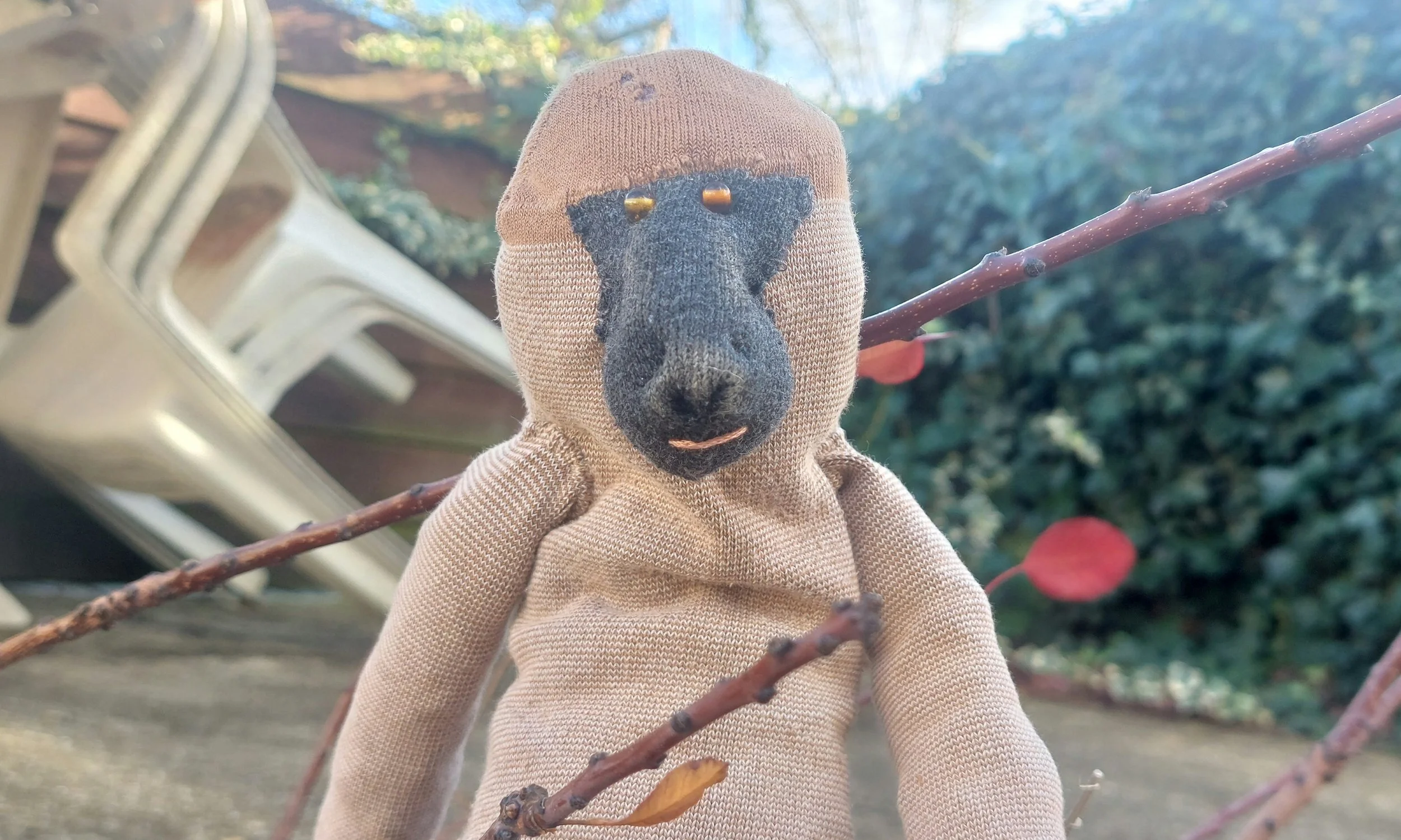
I was inspired to make this little fella, complete with grey “ischial callosities” (tough, hairless sitting pads to act as built in cushions on many Old World primates’ buttocks) while reading an old book called The Soul of The Ape by one of the earliest primatologists, Eugene Marais. In 1907, Marais went to live with and study a troop of chacma baboons for three years. He was one of the first people to undertake a long term study of truly wild primates, and his work was groundbreaking. Marais was one of the pioneers of ethology (the science of animal behaviour) and presented the theory that baboon consciousness was based on “causal memory” - the ability to recognise and remember the relationship between cause and effect - and how this was often in conflict with the animal's “phyletic memory” - the innate instinctual, inherited memory from ancestral experience. Seeing baboons as the bridge between “lower mammals” and humans, he believed this could offer great insight into human consciousness.
Baboons are found predominantly in Africa. They are more “dog-like” looking than most other primates, with a long snout-like muzzle. Chacma baboons specifically (found in South Africa) are one of the largest and most terrestrial monkeys. They live in highly organised social communities consisting mostly of adult females and their infants, with a smaller number of adult males and one dominant male.
Baboons appear in a wide array of folklore, primarily from their habitat countries where baboons have always interacted with humans in one way or another. They appear in African folklore, often as tricksters, and Hamadryas baboons were once sacred in Ancient Egypt. Here are just a few bits of lore about baboons - some mythological, others true stories.
Part 1: Humanised Baboons
One of my biggest interests is the ‘human and non-human primate interface’ - how we represent, interact with and relate to other primates, and how that affects individual primates and the survival of their species. Here are a couple of stories about “humanised” baboons.

Corporal Jackie
According to this article, it was quite common in mid twentieth-century (and earlier) South Africa to allow pet monkeys into service units! So, Corporal Jackie, one of the most historically famous baboons, joined the South African Expeditionary Force along with his owner, Albert Marr, who had captured the young baboon years previously after finding him on his farm, and trained him to become a member of his family. Jackie became a mascot for the 3rd South African Infantry Regiment. He was given his own uniform, his own rations, knife and fork and washing basin, and his own pay book.

Jackie even spent time in the trenches in France, where he got hit by shrapnel during enemy fire while trying to build a wall around himself. Miraculously, the young baboon survived, but had to have his leg amputated. Both Jackie and Albert Marr survived the war, and afterwards both returned to South Africa. Sadly, though, as these stories often end, poor Jackie died in a fire a year after his return.
Jack the Railway Baboon
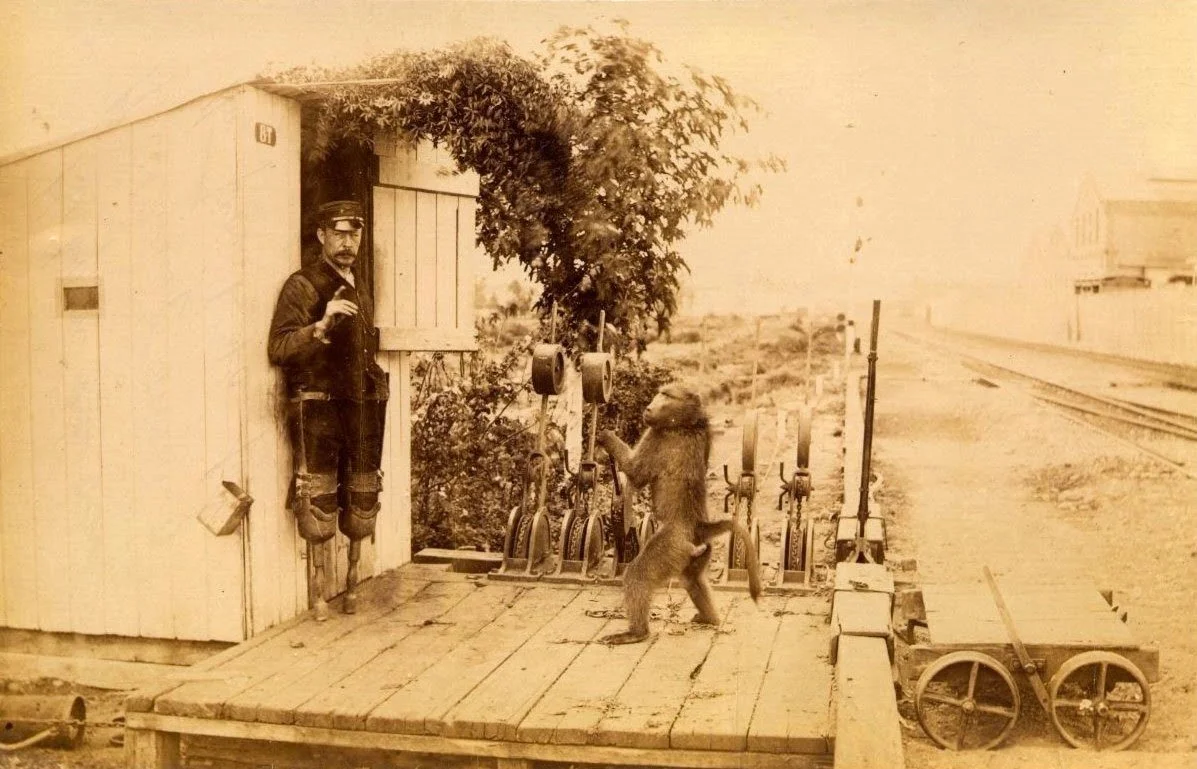
Jack was a chacma baboon who became the assistant of disabled signalman James Wide in South Africa after Wide lost both his legs in a railcar accident. Jack was bought by Wade in 1881 and was trained to push Wade’s wheelchair and operate the railway signals. Jack was officially employed by the railway and paid twenty cents a day and half a bottle of beer each week. Jack reportedly never made a single mistake in his nine years of employment.
Part 2: Folklore
Ancient Egyptian lore about Hamadryas Baboons
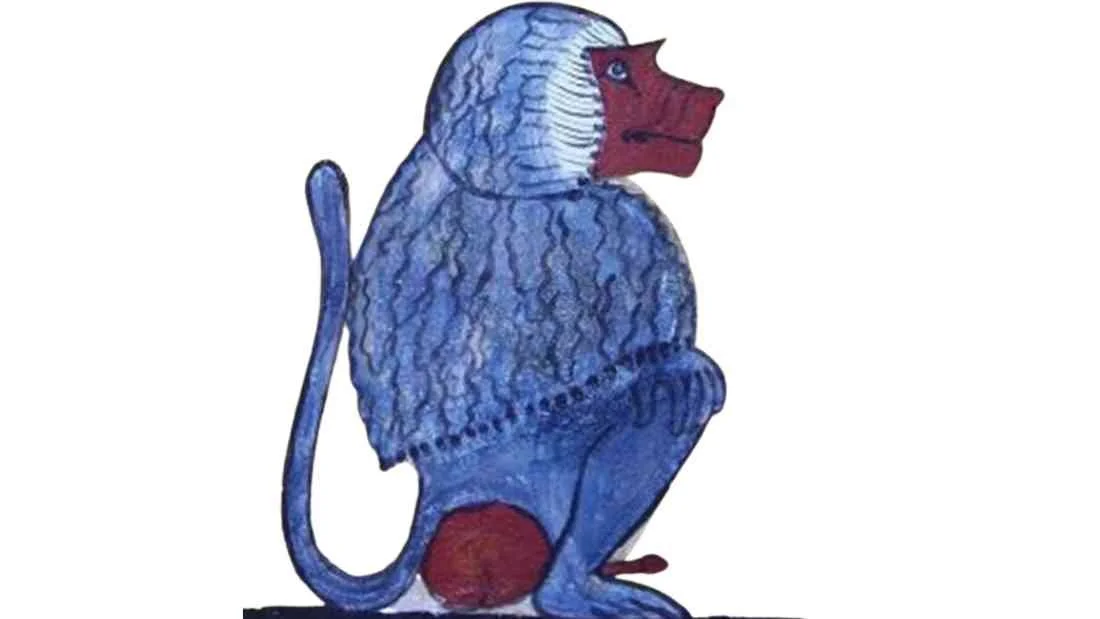
The Egyptian God, Thoth (god of wisdom, art, science, judgment and the dead) was often depicted with a baboon’s dead, so hamadryas baboons, imported into Egypt, were regarded as sacred. Baboons were presented with a writing tablet, ink and reed pen, and if they showed an interest, were enrolled as a symbol of Thoth.
Egyptian God, Babi
The Egyptian God Babi was another deification of the hamadryas baboon. Babi was believed to devour the souls of the unrighteous in the Underworld after they had been weighed against Maat. Babi was also seen as the god of virility of the dead. He was often depicted with an erection, which was sometimes used as a mast of the ferry which transported righteous souls to Aaru (Paradise)!
South African Folklore
There is a South African folktale called The Baboons that Went This Way and That about the origins of baboons. In the tale, people have begun to feel unsafe in their village due to wild animals eating their crops and attacking them. So, one by one the families leave their huts and retreat up into the hills. They live in caves, climb trees and forage for fruit. Slowly, they begin to lose human speech, their noses grow into long snouts, and their teeth grow longer, too. They start to walk on four limbs, and remove their clothing as their bodies become covered in hair. They become a new creature: the baboon.
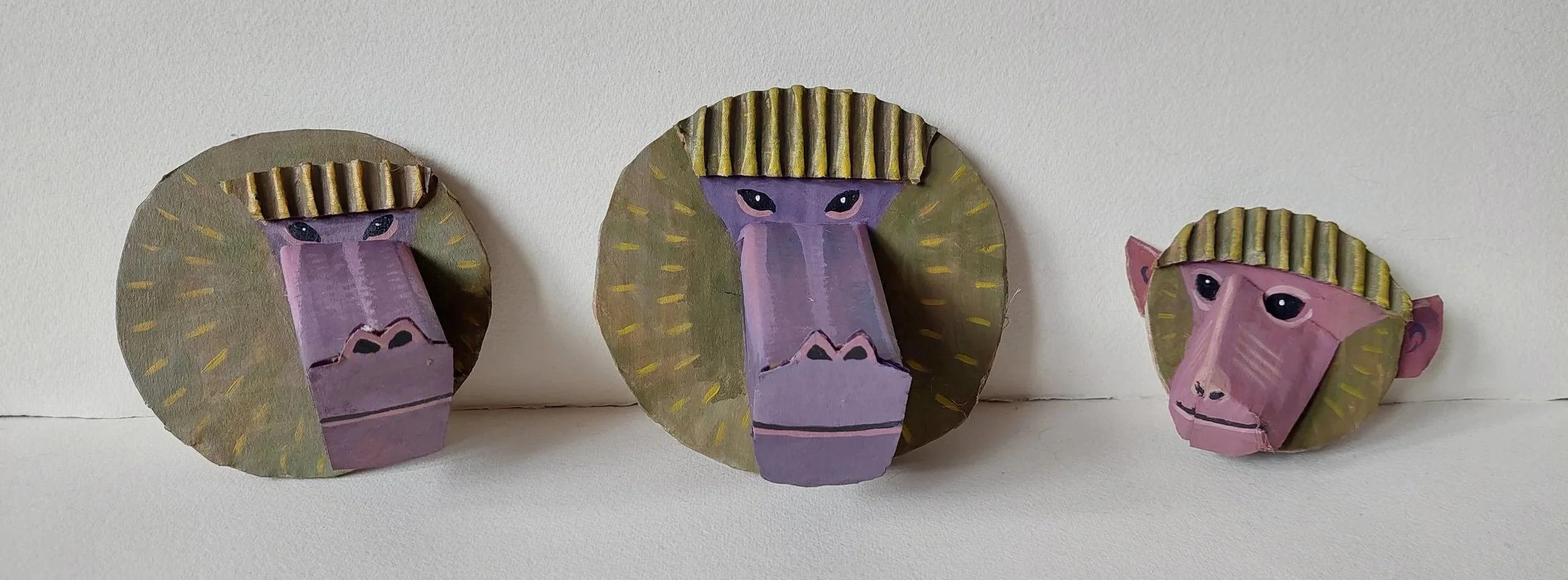
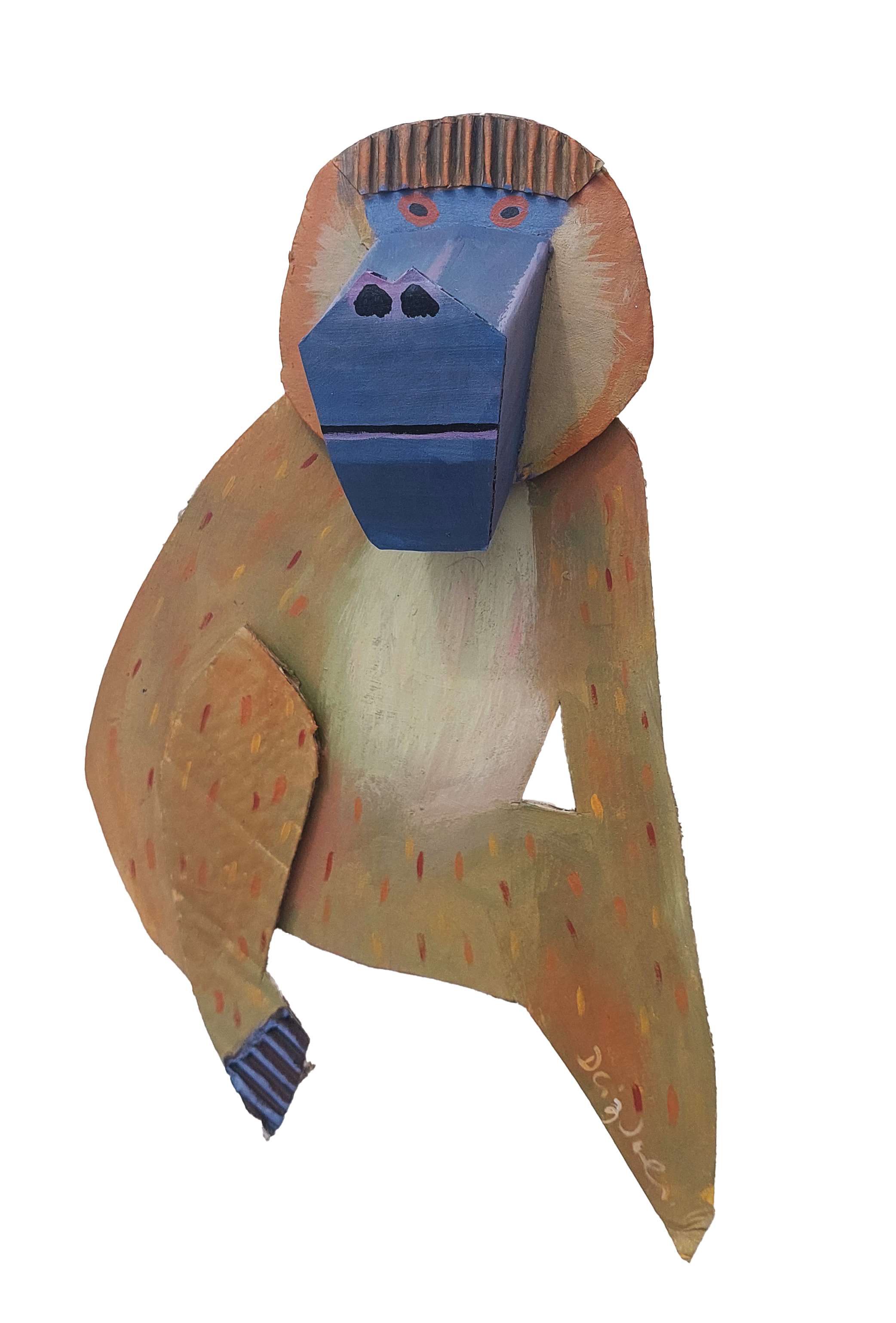
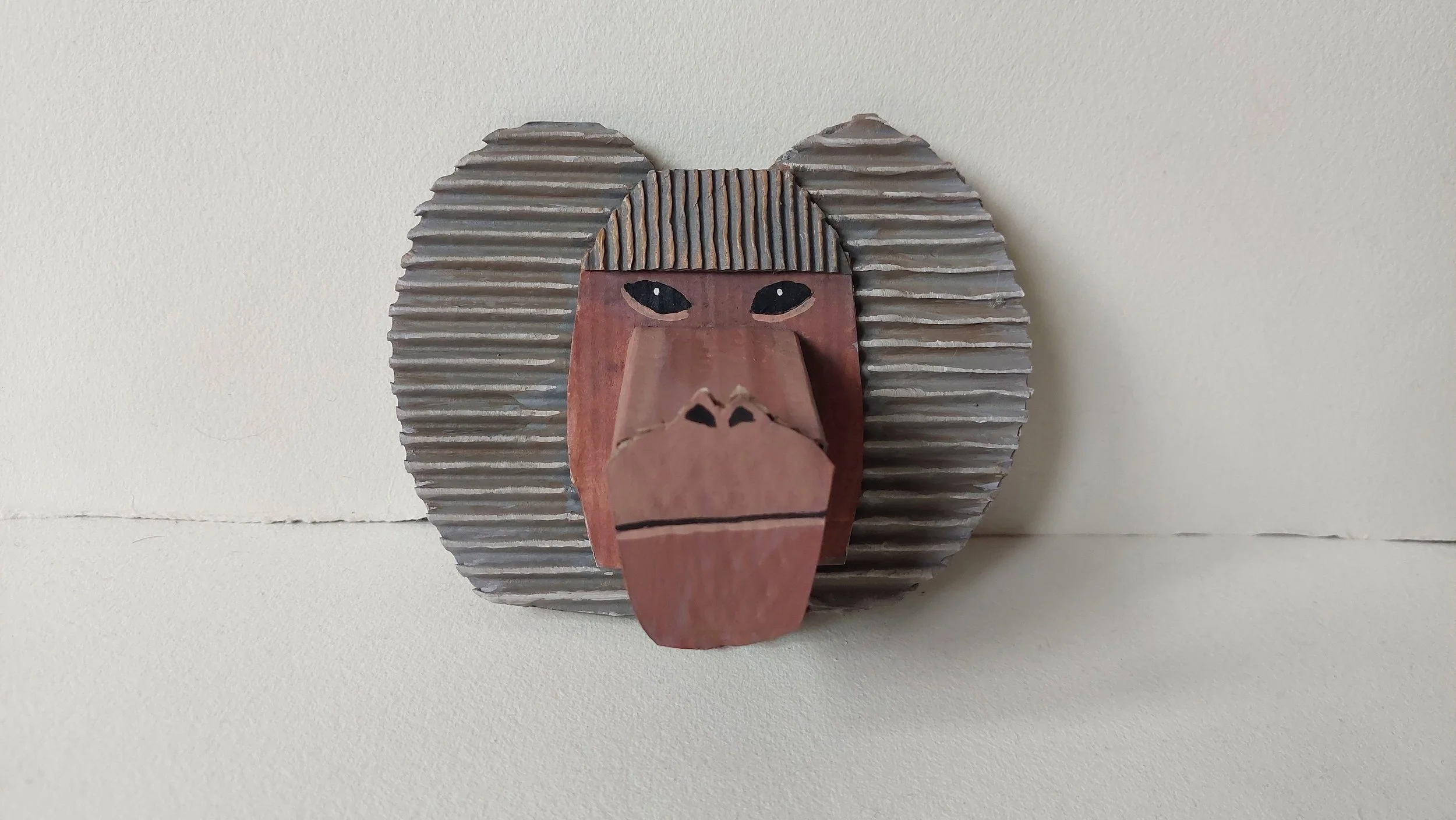
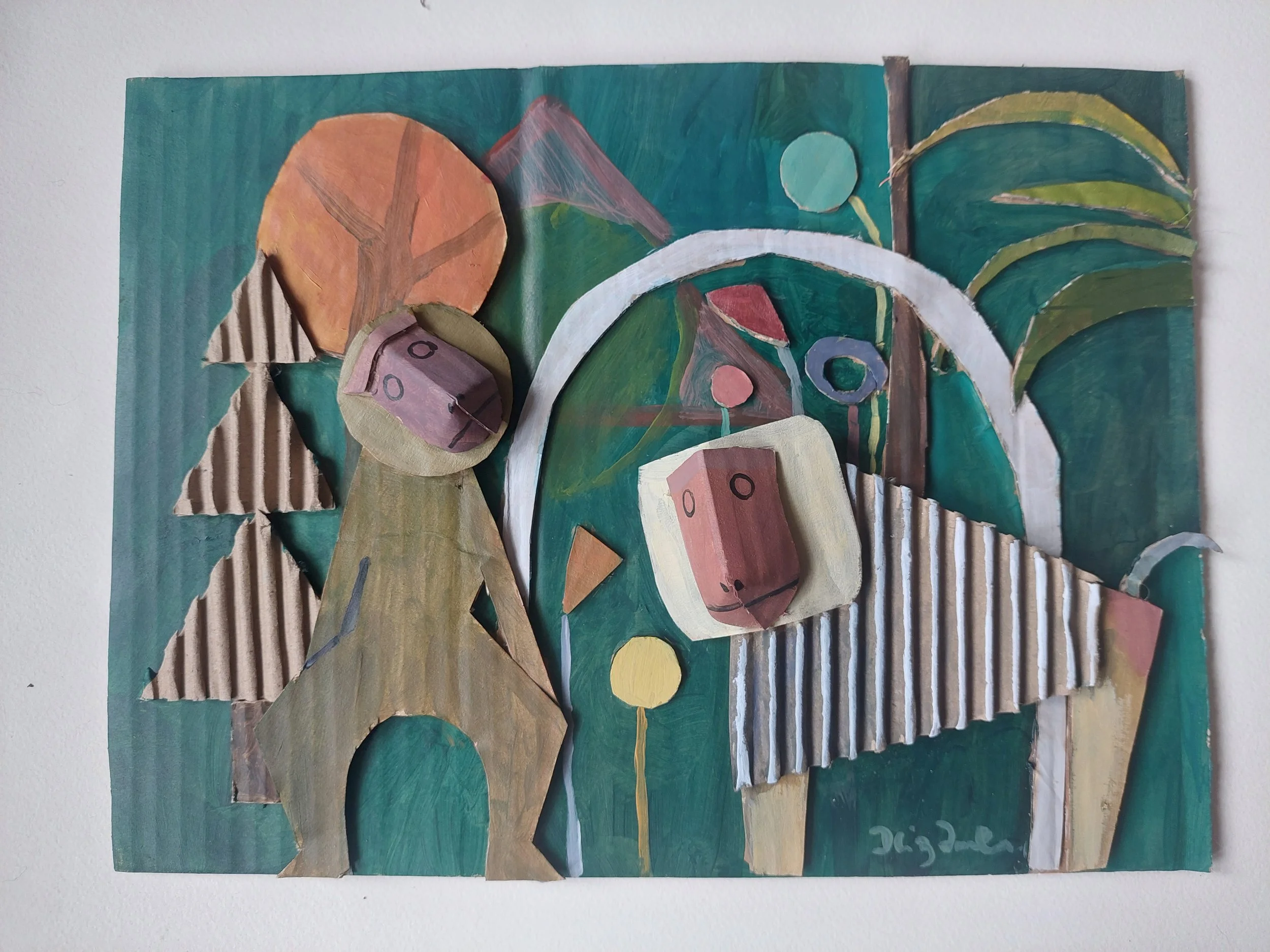
Some of my cardboard art baboons
Baboons often appear in South African folktales, and their role shifts over different stories from that of antagoniser and mischief maker, to wise adviser, or as a metaphor for human folly (these archetypes tend to appear in primate stories from all different cultures).
Part 3: Baboons as The Uncanny
The story described above suggests a shapeshifting relationship between humans and baboons, acknowledging kinship between them. This article suggests that hunter-gatherer societies in South Africa had a deep respect for baboons, but that tensions between humans and baboons came with the shift from hunter-gatherer lifestyles to that of sedentary farming. [I have to interject here to say that there are some references to animal cruelty coming up, though I will not go into graphic detail]. As humans and animals have had to live together more closely, baboons up to this day are a real threat to food security for their local humans, due to crop raiding. This sadly ends up with baboons being killed. Not only that, baboons are also associated with darker folkloric beliefs. Historically, they became associated with witchcraft - believed to be witches familiars - and this belief prevails to this day in some areas. This has resulted in baboons being hunted down and killed.
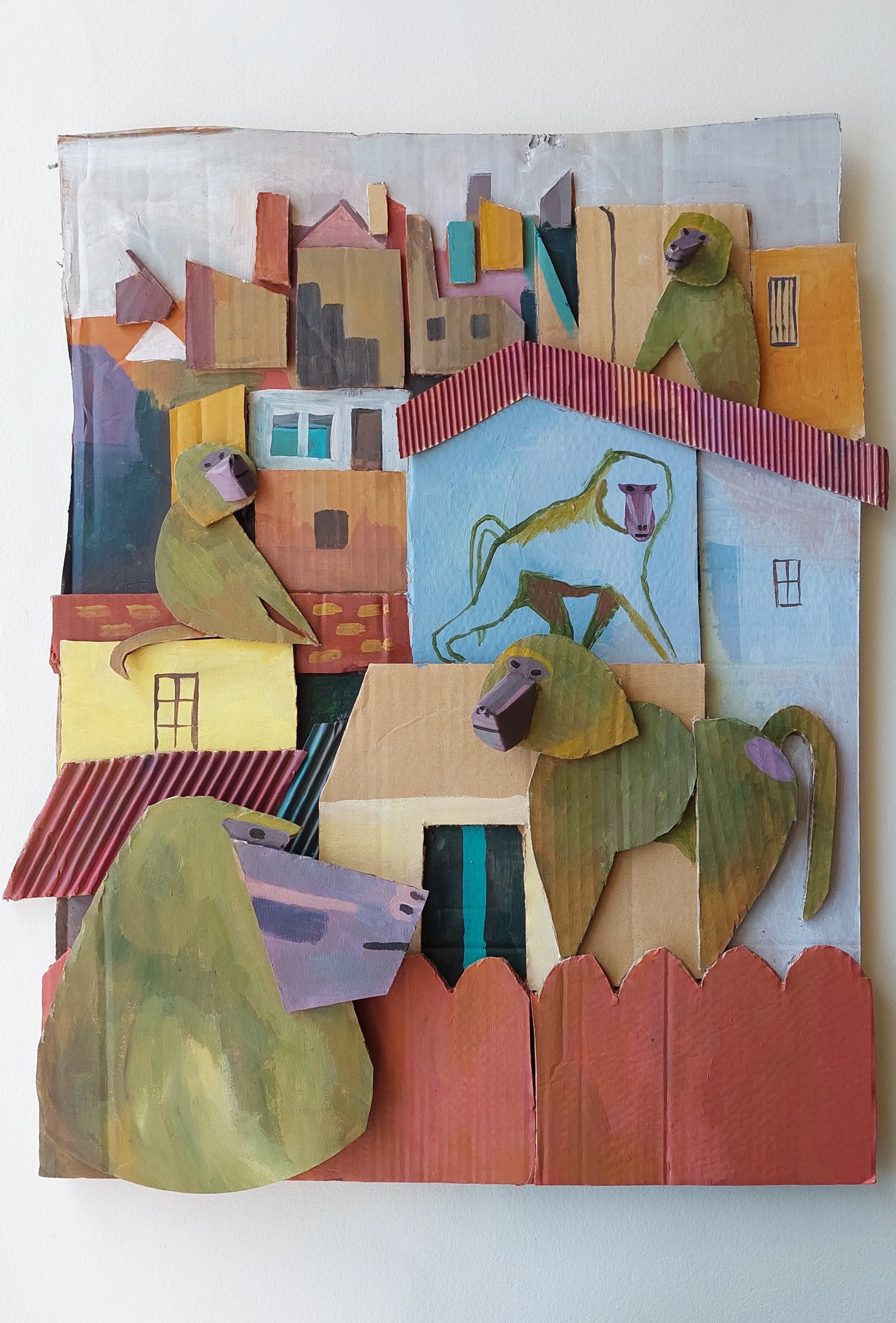
The article I just linked interestingly points out how this association of baboons with dark magic and “evil” speaks to the wider context of our uncomfortable relationship with primates due to their evocation of ‘The Uncanny’. As the author of the article, Sandra Swart, can express this more eloquently that I can, here’s a quote from the article:
““Historically, the uncanny creature has been used as a proxy or scapegoat to account for something unsettling or unlucky. The uncanny might also be that which unconsciously reminds us of ourselves – the dark side of ourselves, the “animal side”, our own repressed impulses. So we project these onto the uncanny thing, blaming them for inexplicable troubles that befall us.””
This is one of my biggest interests regarding primates: their ability throughout history to tap into both our affinity on one hand and disgust and fear on the other, due to the uncanniness of their proximity to humanity. Over 60% of primates are in danger of extinction. Our relationship with them is very complex, and this has and continues to have a dramatic effect on their conservation status.
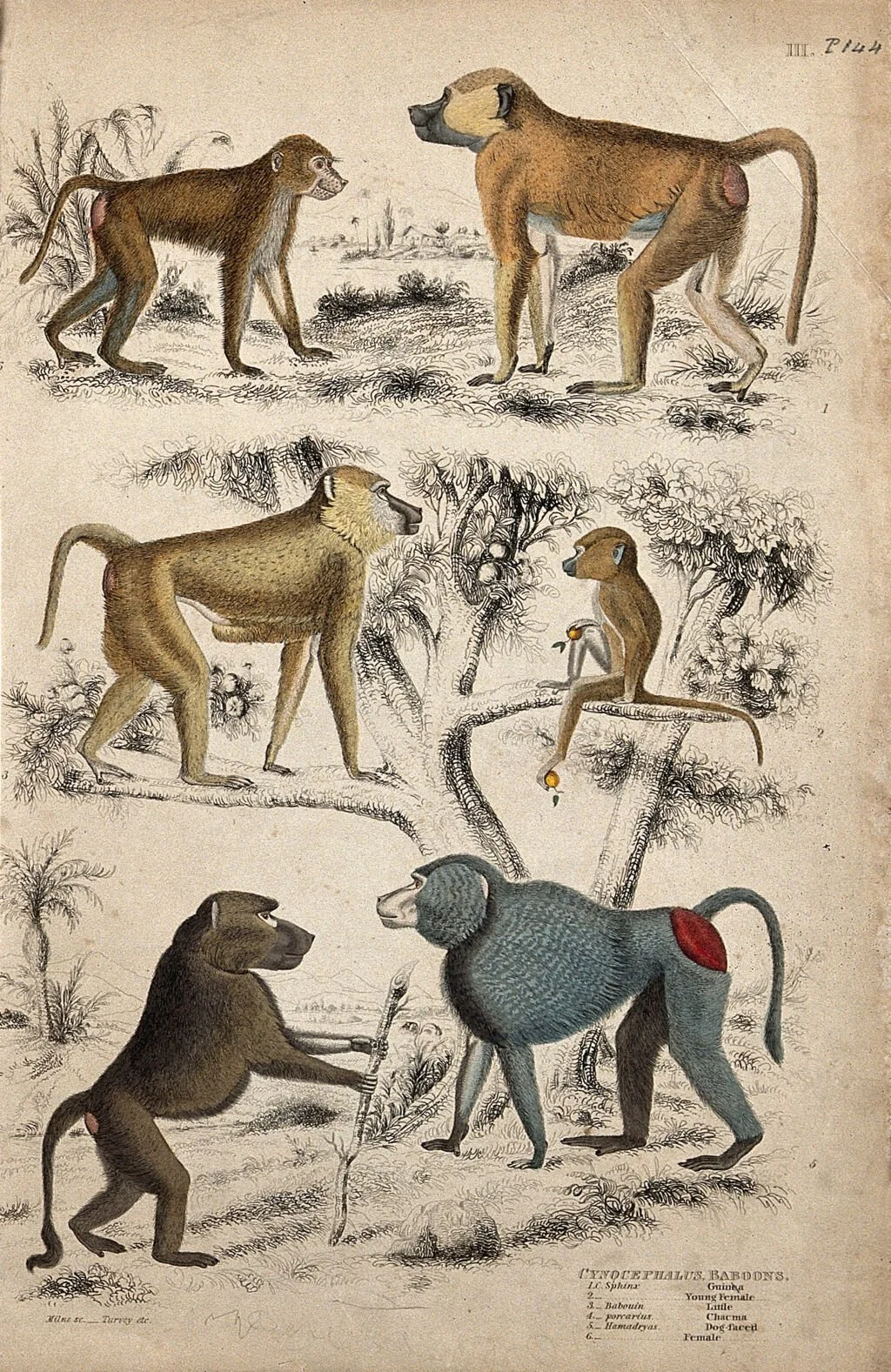
Six different species of baboon are shown in their natural habitat. Coloured etching by S. Milne and Turvey.
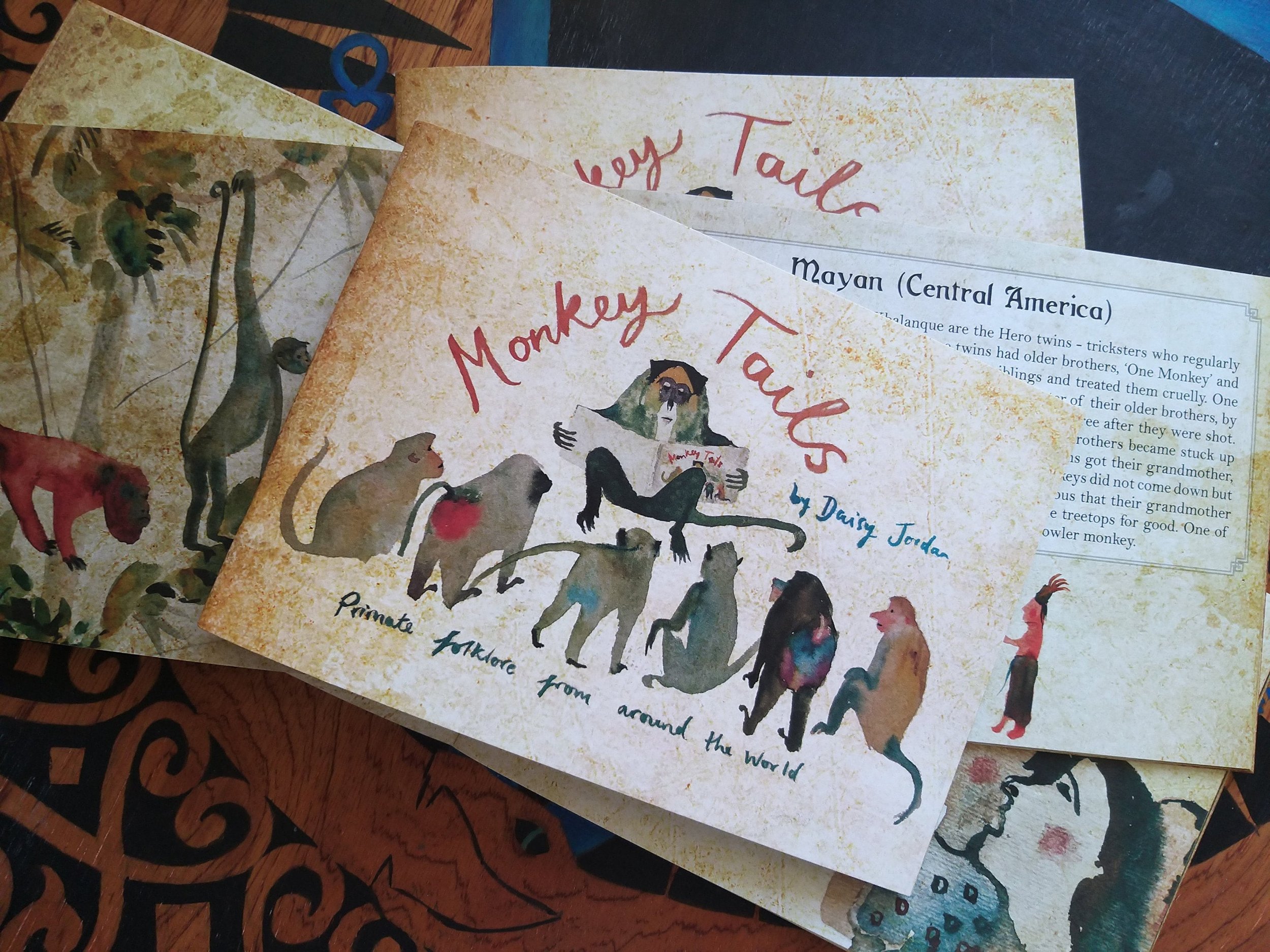
Here is a segment of the introduction, to give you more of an idea about the zine: "Humans have always been fascinated by non-human primates. Hovering on the seeming boundary between human and other, monkeys and apes have always aroused in us feelings of fascination and discomfort. I have always been interested in this complicated relationship, and how it has been expressed through time in art and storytelling. I decided to create this zine to gather together various folklore about primates from around the world, and explore how depictions of primates differ and coincide across cultures."
The lore ranges from the famous Monkey King (Sun Wukong) of Chinese folklore, to medieval Western ideas of monkeys as representatives of the sinner, to Mayan legends, to the Swahili folk story, "The Monkey and The Shark.
This 28 page zine is printed in full colour, on heavy weight, uncoated matt paper which has been made to look like old parchment. It is A5 sized, and has a landscape format.
Stories collected, re-written and illustrated by Daisy Jordan. Zine designed by Daisy Jordan with digital assistance by Ulysses Black.
[Please note - Some products may be subject to import taxes and custom duty fees after arriving in the country of destination. Whilst I do my best at my end to avoid these, all import duties and taxes are the responsibility of the buyer, so please be aware of this when buying internationally!
Thanks so much for visiting and I hope you enjoy my shop! :)
Daisy x
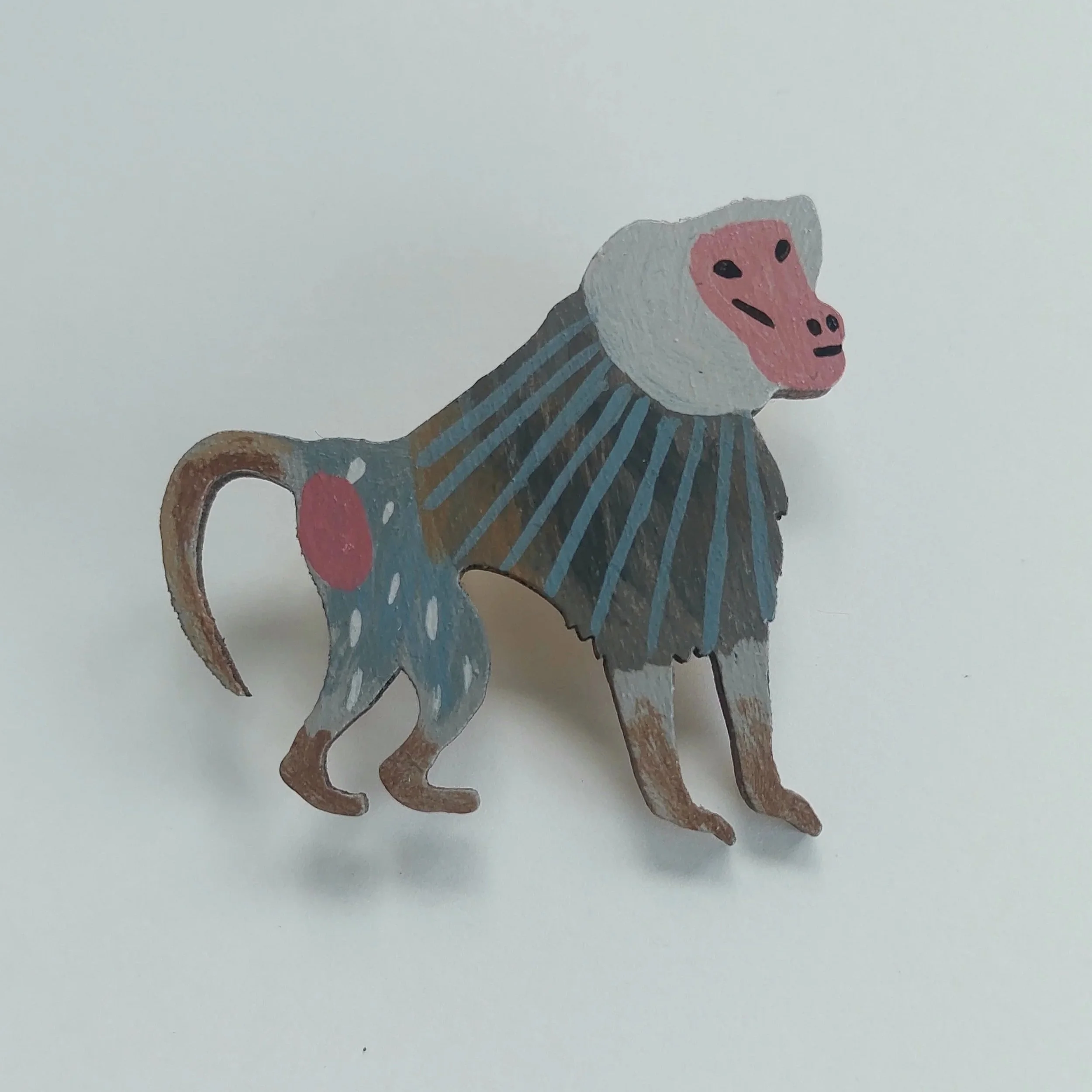
A wooden laser cut brooch designed and hand-painted by me! This one depicts a hamadryas baboon - a large monkey found in the horn of Africa and Arabia. It is cut from sustainable plywood, painted with acrylic and finished with shellac. It has two butterfly clasps on the back. Perfect little gift!
It measures approximately 4.5cm in height. As all the brooches are painted by hand, individually, some very small, minor variations in detail might occur.
Will arrive in a little box.
Thank you so much for visiting and I hope you enjoyed my shop! :)
Daisy xx
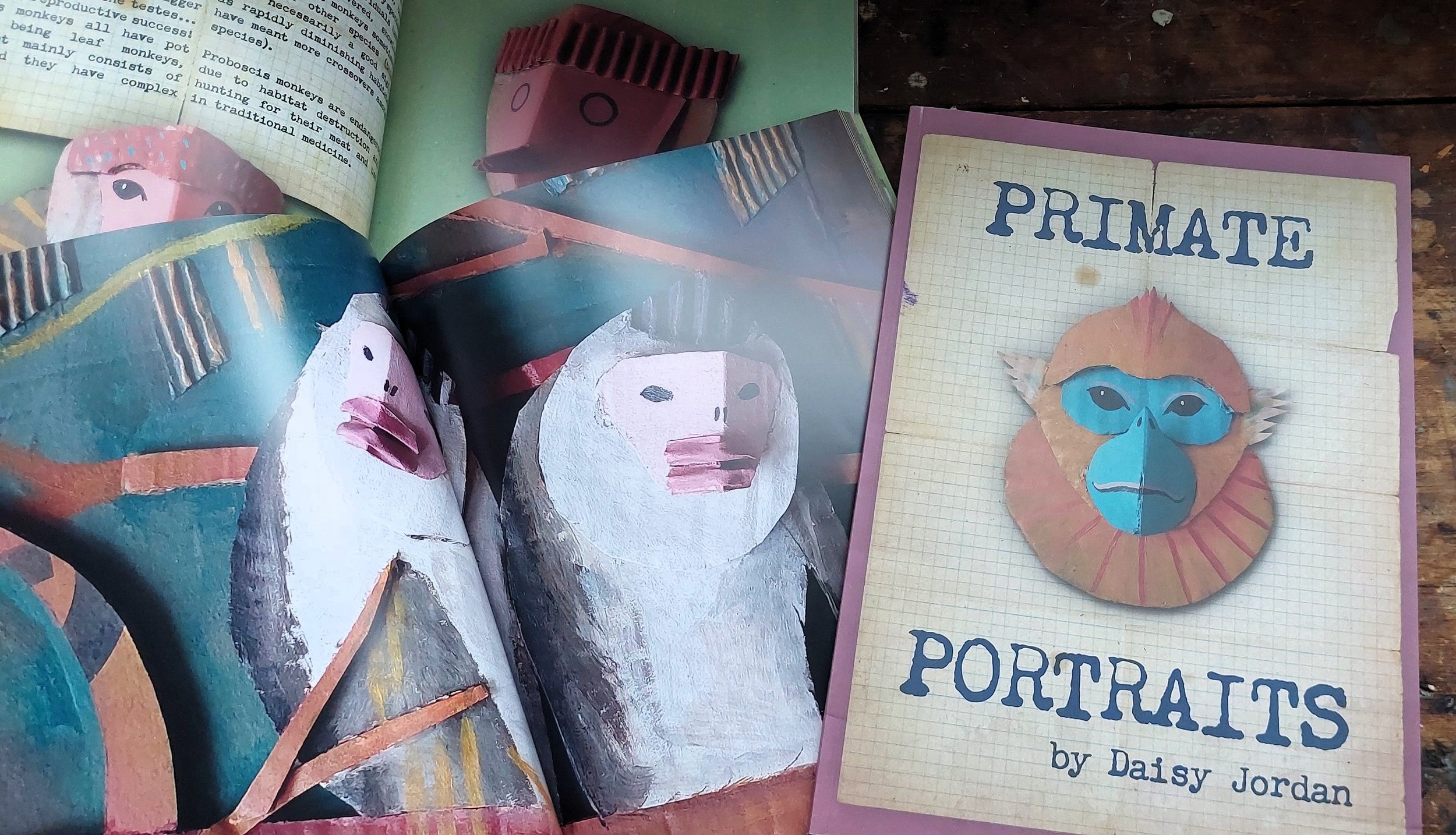
This substantial, lavish artists book has 76 rich, glossy pages illustrated in full colour. "Primate Portraits" is a book made up of my own recycled cardboard art work of various monkey and ape species, with facts about every species illustrated.
I've loved primates since I was a small child, and over the last few years I've been making relief, upcycled cardboard versions of different species painted in high pigment acrylic, and exhibiting them in various exhibitions in Brighton, UK. I decided to collect them into a book along with information about them, and some details about charities helping with their conservation at the back.
This book is A4 sized, paper back, with 76 gloss pages and thick matt cover. It has a 6mm spine. Every page is fully illustrated in rich colours.